

How Florida’s Recent Criminal Statute Updates Affect Pretrial and Sentencing
Florida’s criminal justice system is constantly evolving. Legislative updates, sentencing rule changes, and procedural reforms can significantly affect how criminal cases unfold in court. For individuals facing charges in Miami, understanding how these developments influence pretrial decisions and sentencing calculations is critical. Even small statutory changes can impact bail eligibility, sentencing scores, and ultimately a defendant’s future.
Attorney Roy Kahn of Roy J. Kahn, P.A., a Miami criminal defense attorney with over 35 years of courtroom experience, regularly helps clients navigate these changes. With deep knowledge of Florida criminal statutes and sentencing guidelines, Roy Kahn provides strategic legal defense designed to ensure the law is applied fairly and accurately in every case.
Table of Contents
1. Overview of Florida Criminal Statute Updates
2. How Pretrial Decisions Are Changing
3. Sentencing Guideline Calculations
4. Impact on Repeat Offenders
5. Importance of Legal Defense Strategy
6. Protecting Your Future Under Changing Laws
Overview of Florida Criminal Statute Updates

Florida lawmakers regularly update criminal statutes to address emerging legal issues, public safety concerns, and judicial efficiency. These statutory updates can affect how crimes are classified, how penalties are calculated, and how courts interpret sentencing guidelines.
One key framework affected by these updates is the Florida Criminal Punishment Code, governed primarily by Florida Statute §921.002. This system uses a scoring formula to determine appropriate sentencing outcomes for felony offenses. Legislative changes may adjust how points are assigned for certain crimes, prior convictions, or aggravating circumstances.
When statutes evolve, attorneys must carefully analyze how those changes impact each individual case. A detailed understanding of these developments can reveal opportunities to challenge sentencing calculations or identify legal errors that could significantly reduce penalties.
How Pretrial Decisions Are Changing

Recent statutory updates are also influencing the pretrial phase of criminal cases. Pretrial decisions determine whether a defendant remains in custody or is released while awaiting trial. Courts evaluate several factors when making these determinations, including flight risk, prior criminal history, and potential danger to the community.
Florida courts now place greater emphasis on structured risk assessments during pretrial hearings. Judges may impose stricter conditions for defendants with prior convictions while allowing supervised release programs for lower-risk individuals.
These decisions can shape the entire course of a criminal case. A defendant who remains in custody may face greater challenges in preparing a defense, while those released pretrial often have better opportunities to work with their attorney and gather supporting evidence.
Sentencing Guideline Calculations

Florida’s sentencing structure relies on a detailed scoring system. Judges review sentencing worksheets that assign points based on several key factors.
These factors include the severity of the current offense, prior criminal history, additional charges filed within the same case, victim injury points, and violations of probation or other legal status. The total score determines whether probation, community supervision, or incarceration is appropriate.
Recent statute updates have modified how certain offenses are scored. Crimes involving firearms, violence, or repeat offender status may now carry higher point values. When the total score exceeds a specific threshold, mandatory prison sentences may apply, leaving judges with limited discretion.
Because sentencing calculations can be complex, mistakes in scoring can occur. A skilled defense attorney can review sentencing worksheets to identify miscalculations or improperly applied enhancements.
Impact on Repeat Offenders

One of the most significant areas affected by recent Florida criminal statute updates involves repeat offenders. Lawmakers have increased penalties for individuals with multiple prior convictions, particularly for violent crimes, firearm-related offenses, and repeat DUI violations.
Under updated guidelines, prior convictions may carry greater weight when calculating sentencing scores. This can dramatically increase the likelihood of mandatory prison sentences for defendants with prior criminal records.
However, the classification and interpretation of prior offenses must follow strict legal standards. Defense attorneys often examine whether prosecutors have properly categorized prior convictions when applying sentencing enhancements.
Even a single scoring error can change a defendant’s sentencing range. Identifying these discrepancies can significantly impact the outcome of a case.
Importance of Legal Defense Strategy

When criminal statutes change, defense strategies must adapt accordingly. Experienced criminal defense attorneys analyze how new laws affect sentencing calculations, plea negotiations, and trial strategy.
Roy Kahn has spent more than three decades defending clients throughout Miami and South Florida. His experience allows him to carefully examine sentencing worksheets, challenge improper evidence, and identify weaknesses in the prosecution’s case.
As Roy Kahn often reminds clients:
“A sentencing score is more than numbers on a page — it represents someone’s future.”
By thoroughly reviewing statutory guidelines and case details, a defense attorney can identify opportunities to reduce penalties or challenge improper charges.
Protecting Your Future Under Changing Laws
Florida’s criminal laws continue to evolve, and recent statutory updates affecting pretrial decisions and sentencing calculations highlight the importance of experienced legal representation. Understanding how these changes apply to your case can significantly influence the outcome of criminal proceedings.
If you are facing criminal charges in Miami or anywhere in South Florida, working with a knowledgeable defense attorney is essential. Roy Kahn of Roy J. Kahn, P.A. provides strategic criminal defense backed by decades of experience in Florida courts.
For a consultation, contact Roy J. Kahn, P.A.
Phone: 305-358-7400
Email: rjk@roykahnlaw.com
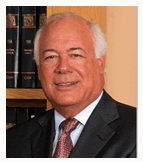 Roy J. Kahn, with years of legal experience in a wide variety of criminal law, heads a “boutique” firm, which means that your attorney is Roy J. Kahn, not a paralegal. If you have been charged or are about to be charged with a crime—or if you have been contacted to be a witness in a federal grand jury case, you need a qualified defense. You should consult with an attorney immediately and know that you have a right to make no statement until you have consulted with an attorney To contact Mr. Kahn, he can be reached at 305-358-7400.
Recent Comments